Part Type
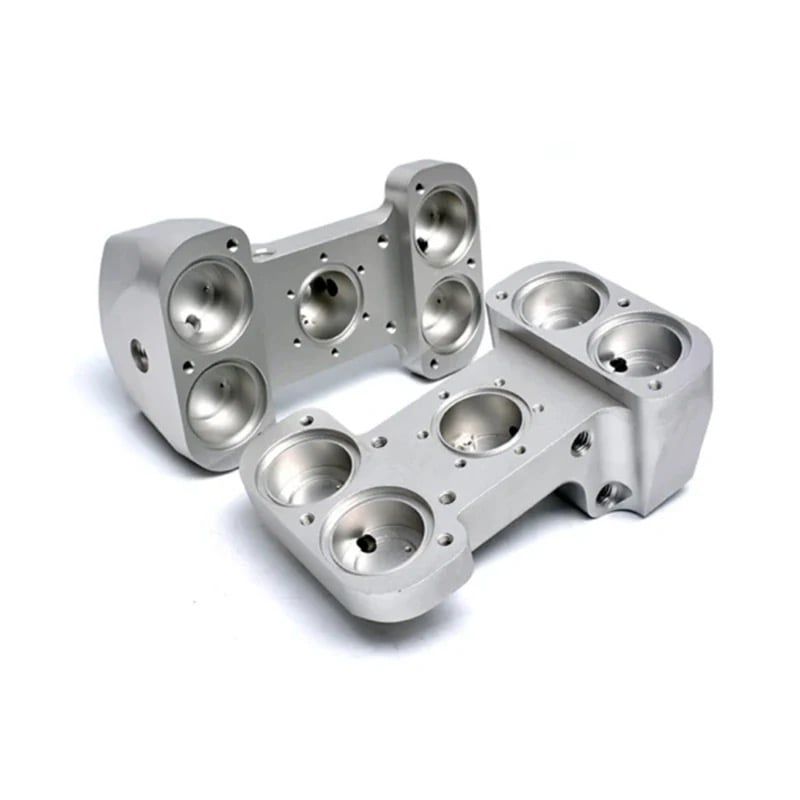
Machined Bearing Housings & Gear Reducer Housings
A housing machined from solid to your drawing, with the bearing bores, shoulders and bolt patterns it calls out.
A bearing housing or gear reducer housing is quoted here as a new part machined from solid bar or plate to your print, in 6061 aluminum, steel or stainless, with the bearing bores, shoulders and bolt patterns the drawing calls out. Cast parts are not quoted, either as a casting or as a machined replacement for a part that was originally cast. Send a STEP file and a PDF through the quote form; there is no minimum, and a person quotes it in 24-48 hours.
Updated November 2026
Before you send it
No C of C or material certifications ship with parts by default. If your PO needs them, say so before the quote. Inspection reports on critical dimensions aren’t included by default. If you need one, ask when you place the order.
What ships with an order covers inspection, inspection reports and certificates in one place.
If a part doesn’t match the print, it’s remade or credited.
Machined from bar or plate: what is quoted
Most gearmotor and reducer housings are castings. The billet route is the one quoted here: a housing to your own design, cut from solid, in one piece or a short run where a casting pattern would never pay.
That covers pillow blocks and flange housings to a print, bearing carriers and end caps, gearbox and reducer cases with two or more shaft bores, and motor mounts with a bearing seat. A sleeve pressed into a worn bore is a different part, covered on bearing housing sleeves, and housings for boards and controls are on machined enclosures and housings.
Which housing bore fit goes on the print?
The fit depends on which ring turns relative to the load: bearing makers sort it into rotating inner ring load, rotating outer ring load and load of indeterminate direction (sources 1 and 2). The table gives one maker’s published housing fits; use your bearing maker’s table for your bearing.
MI CNC Parts does not set the fit or the running clearance. Put the tolerance class or the limits on each bore, and the bore is quoted to the print.
| Load on the bearing | Maker’s examples | Housing bore class | Can the outer ring move axially? |
|---|---|---|---|
| Rotating inner ring load, any kind of load | General bearing applications | H7 | Easily possible |
| Indeterminate direction, normal or light loads | Pumps, medium and large motors | JS7 (J7) | Possible |
| Indeterminate direction, normal or heavy loads | Pumps, medium and large motors | K7 | Generally impossible |
| Rotating outer ring load, light or variable loads | Conveyor rollers, rope sheaves, tension pulleys | M7 | Impossible |
| Rotating outer ring load, normal or heavy loads | Vibrating screens | N7 | Impossible |
What the bearing seat and shoulder should show
Three things from the bearing maker’s mounting guidance belong on the drawing. The fillet at the bottom of the bore has to be smaller than the smallest edge radius of the bearing ring, so the ring seats on the shoulder and not on the corner; the shoulder has to be high enough to support the bearing face; and the shoulder has to be square to the bore (source 3). Give the fillet or the relief, the shoulder diameter and a perpendicularity callout from the bore axis.
Position, perpendicularity and runout callouts are quoted from the print. Roundness and cylindricity callouts on a bore are quoted the same way.
How are two bearing seats on one shaft tied together?
By one datum axis. Dimensional errors of the shaft and housing leave the inner and outer rings slightly misaligned, and the same maker puts the permissible misalignment at usually less than 0.0012 radian, about 4 minutes of arc, depending on the bearing type (source 1). Its design advice for a one-piece housing with two or more bearings is to design the bores so both seats can be finished together in one operation (source 1). On the print, make one bore the datum and give the other a position or runout callout to it.
A split housing needs more care: the maker warns that a split housing often deforms the bearing into an oval shape, and should be avoided where a tight fit with the outer ring is required (source 1). Show how the halves are located to each other.
Ordering: what to send and quantities
- What to send. Any file type is accepted. A STEP model plus a 2D PDF drawing is ideal; IGES, SLDPRT, Parasolid, DXF, DWG, STL and ZIP all work, and a sketch, photo or new sample part can start a quote. The drawing should carry the bearing designation beside each bore.
- From a sketch or a sample. A fully dimensioned 2D PDF is quoted without a CAD line. If the design starts from a sketch, a new sample part or photos, CAD is quoted as its own line.
- Quantities. Ask for more than one quantity, such as 1, 25 and 100, and the quote shows each.
- Files, payment and lead time. How to order CNC parts and what ships with an order cover files, payment, vendor setup, blanket orders and lead time.
What changes when the housing is aluminum
The published tables assume cast iron or steel. The same maker notes that for housings made of light alloys the interference should be tighter than its table lists, and that with non-ferrous housings any temperature rise in operation changes the interference or clearance of the outer ring, because the housing and the bearing steel expand at different rates (source 1). Say the operating temperature on the request if the fit is close, and put the bore limits you have chosen on the print.
What a gear reducer housing adds
Center distance. Errors in the center distance between two gears directly change the backlash of the mesh (source 4). Dimension the shaft bores from one datum, put the tolerance on the center distance itself, and tie each bore pair on a shaft to its own axis as above. Seal bores, drain and fill ports and the mounting feet are quoted from the print with the rest.
Questions
Before you send a job.
01 Is a housing to my own design quoted if the stock part is a casting?
Yes. A custom part to your own design, made from solid, is machining and is quoted. What is not quoted is the casting itself, or remaking an existing cast part by machining.
02 What tolerance class should the bearing bore be?
That is set by the bearing maker’s housing-fit table for your bearing and load. MI CNC Parts quotes the class on the print.
03 Can a bearing housing be aluminum?
Yes. One bearing maker notes that light-alloy housings need a tighter interference than its table for cast iron and steel, and that temperature changes the fit because aluminum and bearing steel expand at different rates. Put the bore limits you have chosen on the print.
04 How do I keep two bearing bores in line?
Make one bore the datum axis and give the other a position or runout callout to it.
05 Can you machine a reducer housing with two shaft bores?
Yes, to the print. Put the tolerance on the center distance itself, because center distance errors directly change gear backlash, and dimension both bores from one datum.
06 Is this the same as a bearing housing sleeve?
No. A sleeve is pressed into a worn bore in an existing housing and is covered on bearing housing sleeves. This page covers a new housing machined from solid.
Related
Where to go next.
Bearing Housing Sleeves
The sleeve for a worn bore in an existing housing.
View →Machined Enclosures & Housings
Housings for boards, controls and instruments.
View →Custom Bushings & Sleeves
Bronze and steel bushings to a print.
View →Shafts & Pins
The shaft that runs in the bores.
View →Custom Flanges
Bolt-on covers and mounting flanges.
View →Get a Quote
STEP + PDF in, numbers back in 24-48 hours.
View →Sources (4)
Bearing makers’ tables are each maker’s published guidance for its own product, cited as plain text. Use the table for the bearing you are buying.
1. NSK, "Rolling Bearings" catalog, technical information, sections 2, 8 and 13: nsk.com/content/dam/nsk/common/catalogs/ctrgPdf/bearings/e1103c_parta.pdf, no date shown (Table 8.5, fits of radial bearings with housings, and its remark that for housings made of light alloys the interference should be tighter; interference for the ring that rotates relative to the load; section 8.3.2 on temperature rise in aluminum housings; permissible misalignment usually less than 0.0012 radian; bearing seats in a single-piece housing finished together in one operation; split housings and tight outer ring fits).
2. JTEKT, "Basic Bearing Knowledge: Fit selection": jtekt.co.jp/products/bearing/en/support/bearing-knowledge/9-3000.html, no date shown (load characteristics classified as rotating inner ring load, rotating outer ring load and indeterminate direction load).
3. NSK Americas, Technical Insight "Design for Shafts and Housings", revision 2 (the largest fillet radius of the housing must be smaller than the smallest edge radius of the bearing ring; shoulders must be high enough to adequately support the bearing face). NSK, "Rolling Bearings" catalog, technical information, sections 2, 8 and 13: nsk.com/content/dam/nsk/common/catalogs/ctrgPdf/bearings/e1103c_parta.pdf, no date shown (section 13.1: shoulders in contact with the bearing face must be perpendicular to the shaft center line).
4. Brian Dengel, KHK-USA, "Mounting accuracy key issue in gear system design", Gear Solutions, April 2021, page 24 (errors in the center distance of two gears directly influence the backlash of the gear mesh).
Get Started
Send us your files.
We’ll take it from there.
A quote in 24-48 hours, no minimums. Like the quote, and we’ll make your parts and ship them to you.
Get a Quote