Part Type
Forming & EDM Punches
Hardened, profiled, and ready for the press.
A punch is a hardened tool that pierces, forms, or trims metal in a press; an EDM punch is profiled on wire EDM to the shape of its die. Punches are quoted in A2, D2, S7, O1 or M2 tool steel, stainless steel, carbide, or another grade the print names, ground or wire-cut to the profile on your print. Send a drawing, or a new sample part to copy, through the quote form for a quote in 24-48 hours, with no minimum order.
Updated October 2026
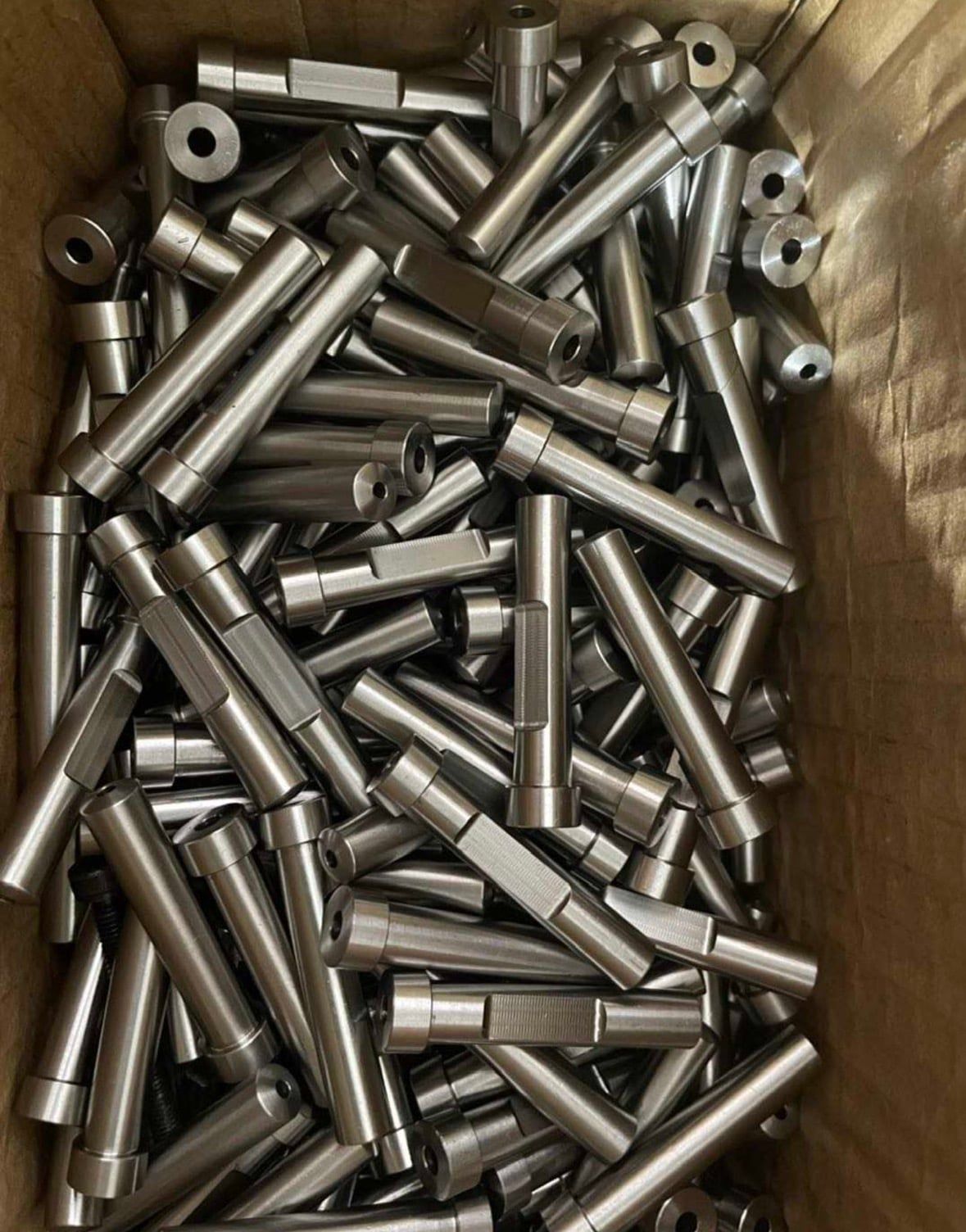
What a punch does, and the punch-and-die pair
A punch is the moving half of a press tool: it presses into or through your material to pierce a hole, form a bend or draw, coin a feature, or trim an edge. The die is the fixed half it works against, and the gap between them, the clearance, sets the load at the cutting edge and affects the quality of the cut (source 4). In one test blanking 55 HRC sheet, the clearance changed how fast the punch edge wore and how the burr grew (source 5). The clearance is the one on your print or die drawing; MI CNC Parts does not set it.
What ships is the punch itself, and the matching die or cavity if you want the pair, made to your print. The press, the setup, and the stroke stay yours. That split suits tool-and-die shops, fabricators, and anyone keeping an old press or progressive die running. Replacement punches for a die you already run are a normal order, not a special one.
Punch materials and hardness
The steel and the hardness come from the print. These are the grades this page lists, described from published references and not as a pick for your job. A2 is the most commonly used air-hardening tool steel, a series known for low distortion during hardening, and it is commonly used for blanking and forming punches and trimming dies (source 1). D2 is very wear resistant but not as tough as lower-alloyed steels (source 1). S7 belongs to the shock-resisting group (source 8), which has very high impact toughness and relatively low abrasion resistance (source 1). O1 is an oil-hardening cold-work steel, typically used at 61-63 HRC (source 1). M2 is the most widely used high-speed steel, and high-speed steels keep their hardness at higher temperatures than high-carbon steel tools (source 6). Carbide is more brittle than other common tool materials and can chip (source 7), and punch tooling is often made of hardened steel or tungsten carbide (source 3). Stainless steel punches are quoted in the grade the print names; the stainless steel page covers the grades. More on stock and grades is on the steel parts page. Other alloys and plastics quoted on request. Name the grade on the print.
If the press tonnage or the material being punched matters to the choice, put it in the part description. The team reviews the print and can suggest changes, but the grade, the hardness and the clearance are the ones on the print. Rush 1-2 weeks applies to machined parts with no secondary operations. Heat treat, grinding, EDM and finishing add time, and the quote gives the real date. Where a job needs a coating for extra wear or release, put it on the print. A finish called out on the print is quoted with the part.
Profiles: wire EDM and grinding
Shaped and non-round punches are profiled on wire EDM, a process commonly used to make punches, tools and dies from hard metals that are difficult to machine with other methods (source 2). Wire EDM needs no high cutting forces, and when the cut comes after hardening, the profile is not affected by hardening distortion (source 2). Keyways, trim shapes and odd pierce profiles are quoted from the profile on the print, with wire-EDM features quoted down to ±0.0002 in.
Round punches, flats and back clearances are done by precision grinding. Ground features are quoted to ±0.0001 in. Point styles such as flat, bevel-sheared or rooftop are quoted from the print; a beveled punch reduces the force at the start of the stroke (source 3).
Common punches, and copying one you already have
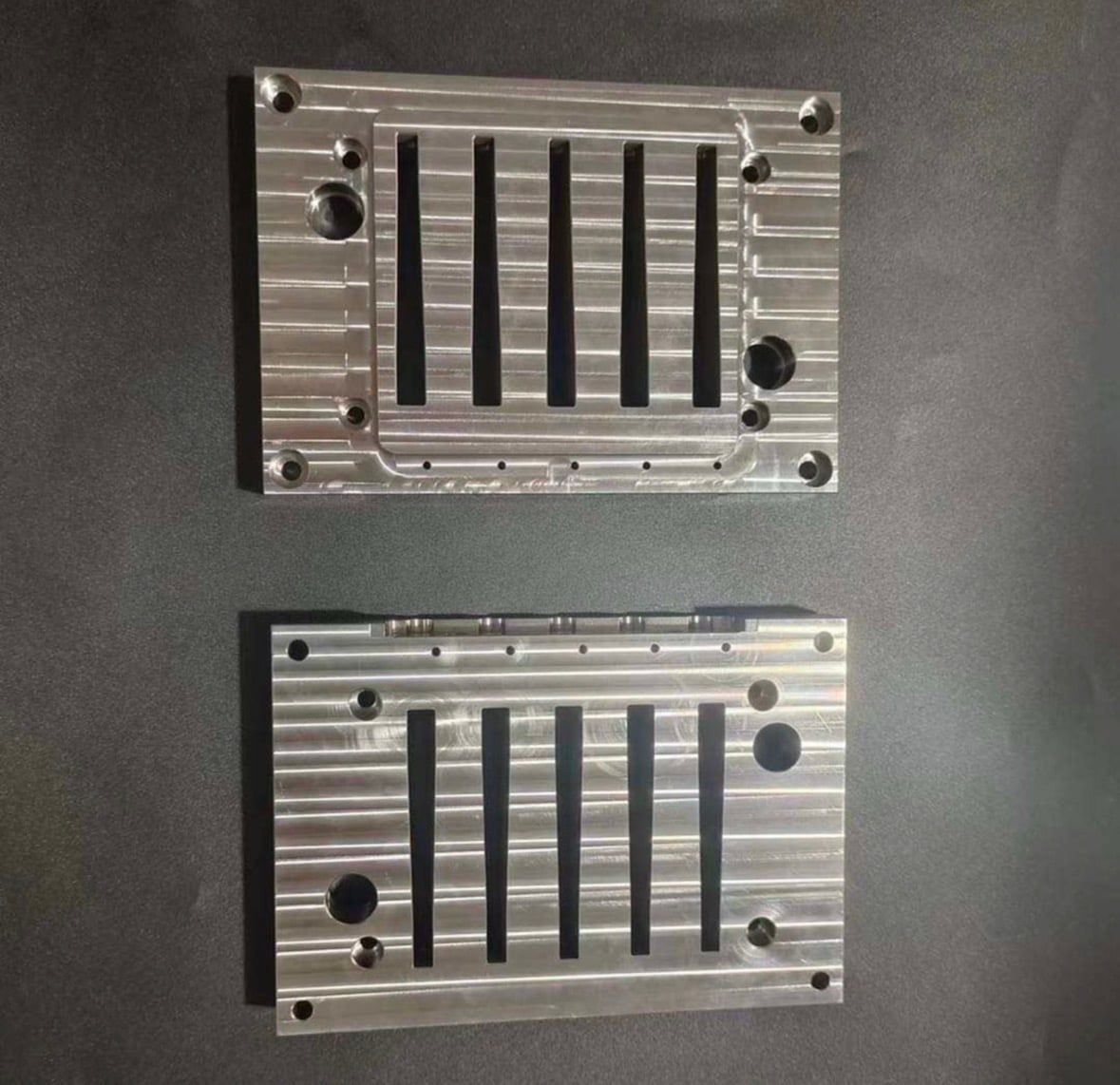
The usual run covers pierce and round punches, form and draw punches, coining and embossing punches, notching and trim punches, and the matching die buttons or cavities that pair with them. A matched punch-and-die set can be quoted together, and a small set of spares for a production die can go on the same order.
Worn out or snapped a punch and the drawings are long gone? Send a new sample part, such as an unused spare. Send a new part, not the worn one. Wear changes the sizes that matter. It gets reverse-engineered to a drawing and remade to match, so a discontinued or undocumented punch is not the end of the line for your tooling. Parts are supplied as replacements by fit and dimensions. No OEM logos, part numbers or markings are copied. The sample ships back with the parts. Send a print or that sample through the quote form with the profile, material, and hardness, and a real person sends back price and lead time in 24-48 hours. Punch and die work sits apart from the rest of the catalog, but the ordering path is identical to anything on the machined parts index.
Sources
All accessed 4 October 2026. Where a figure here differs from your print, the print governs.
1. Wikipedia, "Tool steel": en.wikipedia.org/wiki/Tool_steel (air-hardening A series characterized by low distortion during hardening, with a balance of wear resistance and toughness between the D and shock-resisting grades; A2 the most commonly used air-hardening steel, commonly used for blanking and forming punches and trimming dies; D2 very wear resistant but not as tough as lower-alloyed steels; shock-resisting group with very high impact toughness and relatively low abrasion resistance, able to reach 58 to 60 HRC; O1 can be hardened to 66 HRC, typically used at 61-63 HRC).
2. Wikipedia, "Electrical discharge machining": en.wikipedia.org/wiki/Electrical_discharge_machining (wire-cut EDM used to make punches, tools and dies from hard metals that are difficult to machine with other methods; no high cutting forces; when machining takes place after hardening, dimensional accuracy is not affected by distortion from the hardening step, although material that has not been stress-relieved can distort in the machining process).
3. Wikipedia, "Punching": en.wikipedia.org/wiki/Punching (punch tooling often made of hardened steel or tungsten carbide; the clearance depends on the thickness, thicker material needing more, and on the hardness of the workpiece; a beveled punch helps shear thicker material by reducing the force at the beginning of the stroke).
4. Wikipedia, "Blanking and piercing": en.wikipedia.org/wiki/Blanking_and_piercing (punch and die clearance determines the load at the cutting edge; excessive point pressure can accelerate tool wear; clearance affects the surface quality of the trimmed piece).
5. Jacek Mucha and Jacek Tutak, "Analysis of the Influence of Blanking Clearance on the Wear of the Punch, the Change of the Burr Size and the Geometry of the Hook Blanked in the Hardened Steel Sheet", Materials (Basel), 2019: pmc.ncbi.nlm.nih.gov/articles/PMC6515279 (tests at 5%, 10% and 15% clearance on 55 HRC sheet with a cold-work tool steel punch; the clearance clearly affected the intensity of wear of the blanking edge, and burr growth over the cuts differed with clearance).
6. Wikipedia, "High-speed steel": en.wikipedia.org/wiki/High-speed_steel (compared to high-carbon steel tools, withstands higher temperatures without losing hardness; M2 the most widely used industrial high-speed steel).
7. Wikipedia, "Cemented carbide": en.wikipedia.org/wiki/Cemented_carbide (carbide is more brittle than other typical tool materials, making it susceptible to chipping and breaking).
8. Wikipedia, "Shock-resisting steel": en.wikipedia.org/wiki/Shock-resisting_steel (AISI classifies seven shock-resisting types, S1 to S7; applications include chisels, forging dies and punches).
Questions
Before you send a job.
01 What material should a punch be?
It is a trade between toughness and wear. D2 is very wear resistant but not as tough as lower-alloyed steels, while the shock-resisting group has very high impact toughness and relatively low abrasion resistance (source 1). A2 sits between them and is commonly used for blanking and forming punches (source 1). Stainless steel punches are quoted too, in the grade the print names. Name the grade on the print, and if you are not sure, describe what you are punching or forming in the part description.
02 Can you match a punch to my existing die?
Yes. Send the die drawing, or a new sample part such as an unused spare punch, and the punch is quoted to the profile on the print. The clearance that matters is the one between the punch and your die, so it is the one on your print or die drawing. Matched punch-and-die sets can be quoted together.
03 Who sets the clearance between the punch and the die?
The print does. Published references say the clearance depends on the thickness of the sheet, with thicker material needing more, and on the hardness of the workpiece (source 3). It also changes edge quality and punch wear (sources 4 and 5). MI CNC Parts does not set the clearance, and the part is quoted to what the print says.
04 Can you copy a punch from a sample?
Yes. Send a new sample part, such as an unused spare, and it gets reverse-engineered to a drawing and remade to match, so a discontinued or undocumented punch can be brought back. Turning the sample into a drawing is quoted as its own line, and you end up with a proper drawing on file for next time.
05 How hard are the punches?
Hardness is whatever the print calls for. Published figures differ by steel: O1 is typically used at 61-63 HRC, and the shock-resisting group can reach 58 to 60 HRC (source 1). Put the hardness on the print, and if the print leaves it open, say so in the part description and the quote asks.
06 Can I order one punch, or do I need a full set?
One is fine. There is no minimum, so a single replacement punch is a normal order, and so is a matched punch-and-die set or a batch of spares for a production die. Ask for more than one quantity, such as 1, 25 and 100, and the quote shows each.
Get Started
Send us your files.
We’ll take it from there.
A quote in 24-48 hours, no minimums. Like the quote, and we’ll make your parts and ship them to you.
Get a Quote